
A patient pays £15 a month for your membership plan. It is your plan. You set the price and decided what it covers.
Your team does the dentistry. A plan provider collects the Direct Debit and keeps a fee for that patient before the rest reaches you.
Next month, it keeps the fee again.
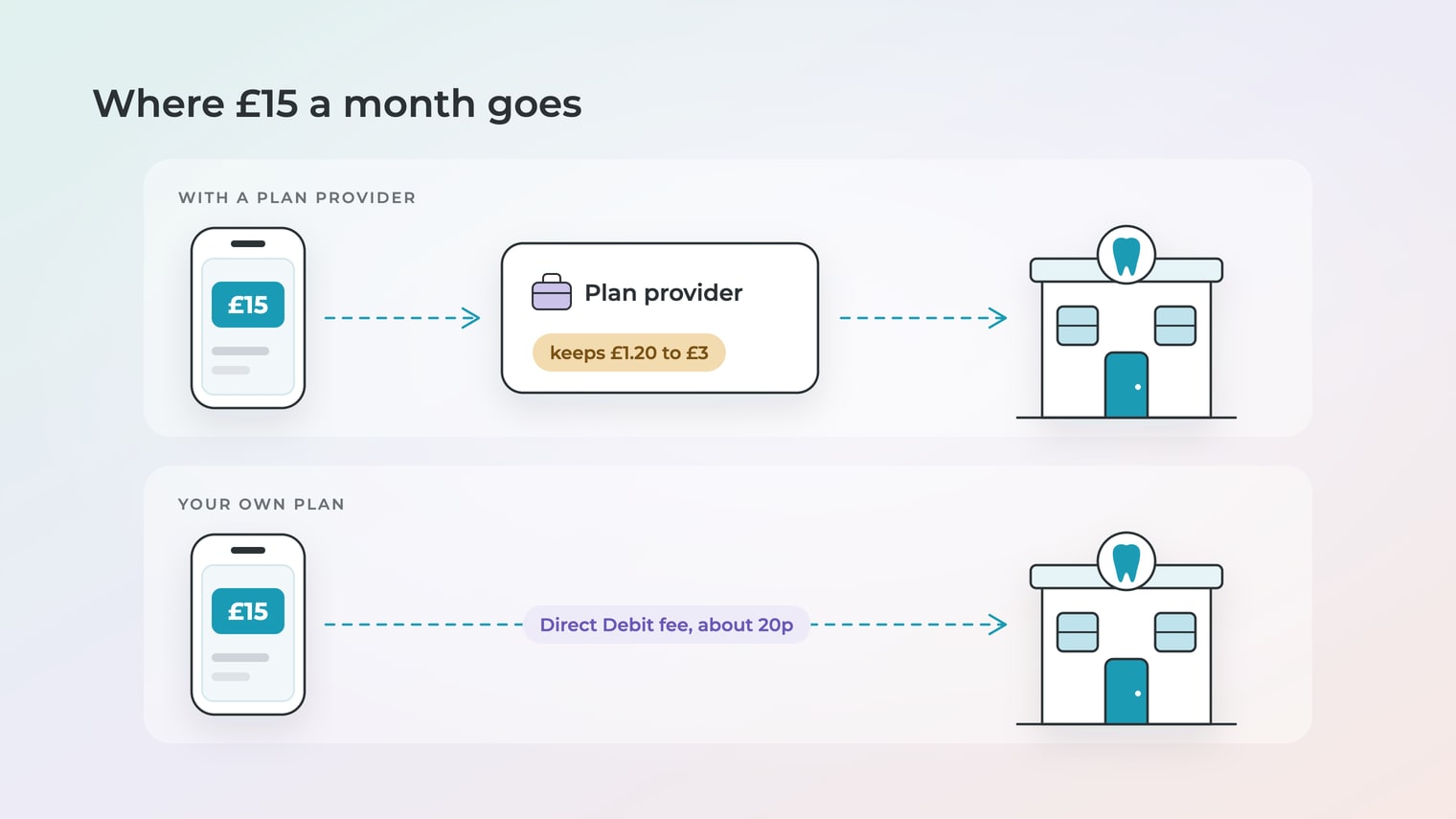
We built membership plans into Lumina so the practice can run the plan itself. The patient’s £15 goes straight to you, less a small Direct Debit fee.
Plans are worth having
More patients are paying for their dental care. In a Healthwatch England poll of 2,593 adults, published in March 2026, 32% of people in England had used private dentistry in the last year. In 2023 it was 22%.
Plan numbers have been rising too. LaingBuisson figures reported by Dentistry.co.uk show capitation plan subscriptions rose 4.6% in 2021 and 7.7% in 2022, for a total of 2.7 million people covered.
Patients on a plan also tend to keep their check-ups. In a Denplan survey of 5,060 UK adults, 81% of adults on a dental payment plan said they visit every six months. Among adults who pay as they go, the figure was 54%. That is a plan provider’s own survey, and it shows a link rather than a cause. Patients who already visit regularly may be the ones who join.
For the practice, a plan means regular monthly income. So the question is not whether to have a plan. It is who runs it, and what that costs.
The sums
Plan providers charge the practice an administration fee for each patient, every month. Dentistry’s guide to dental practice membership plans, which a plan provider sponsors, gives the industry’s own figure: “Fees typically vary between £1.20 and £3 per patient.”
Take 500 members on a £15 plan. That is £90,000 a year of plan income. At £1.20 to £3 per patient per month, provider fees come to £7,200 to £18,000 a year. On your own plan in Lumina, Direct Debit fees for the same members come to £1,200 a year. The practice keeps £6,000 to £16,800 more each year.
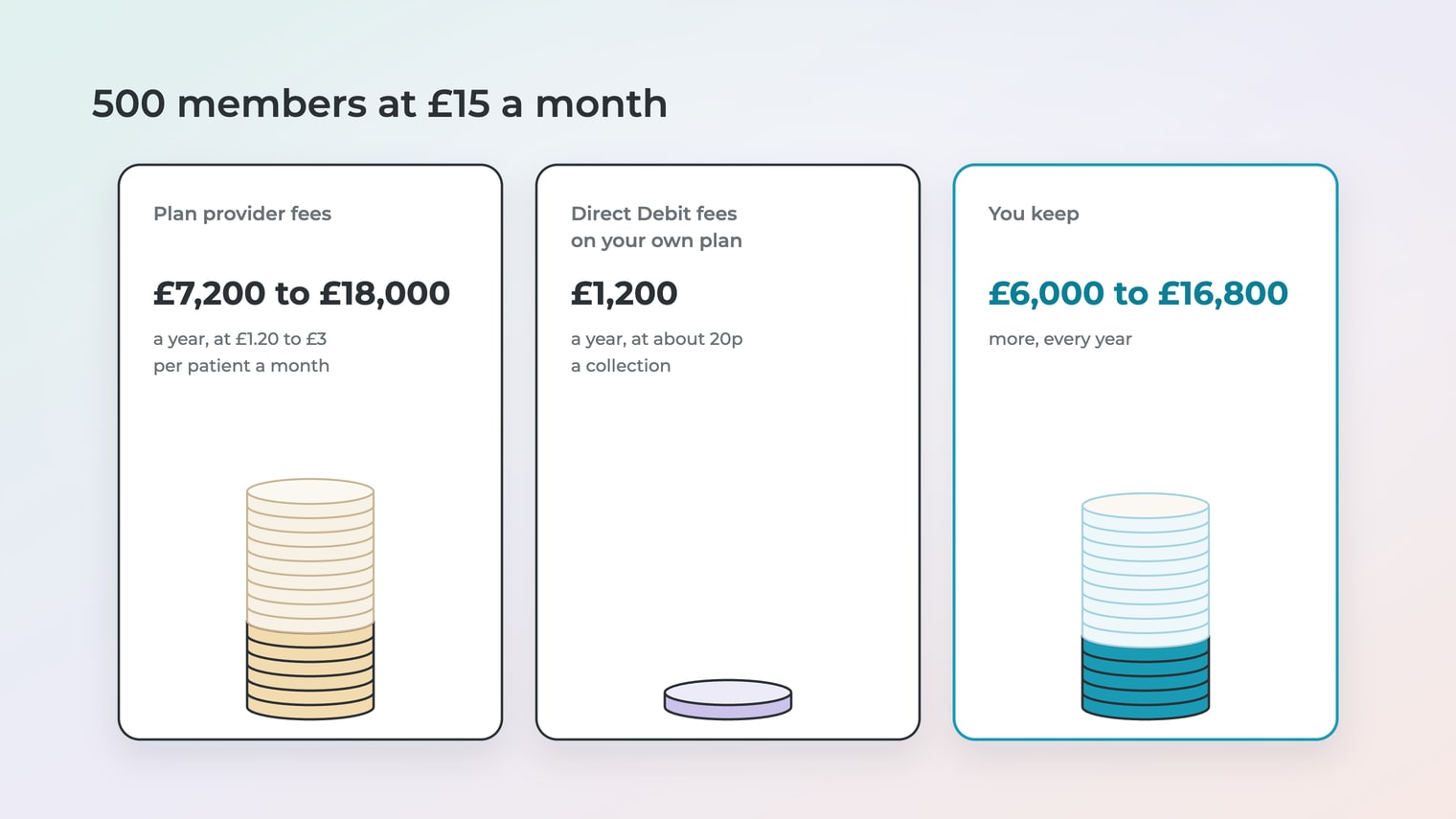
The £1,200 comes from the Direct Debit processing fee. Stripe’s UK pricing for Bacs Direct Debit is 1% a collection, with a 20p minimum and a £4 cap. On a £15 plan that is 20p. Lumina adds nothing on top.
Your members and your prices will be different. Put them in to work out your own number.
Two notes keep the comparison fair. Provider fees can include extras such as worldwide emergency cover, which an in-house plan in Lumina cannot offer. Compare like for like. The figures also leave out VAT, joining fees and provider set-up fees.
How it works in Lumina
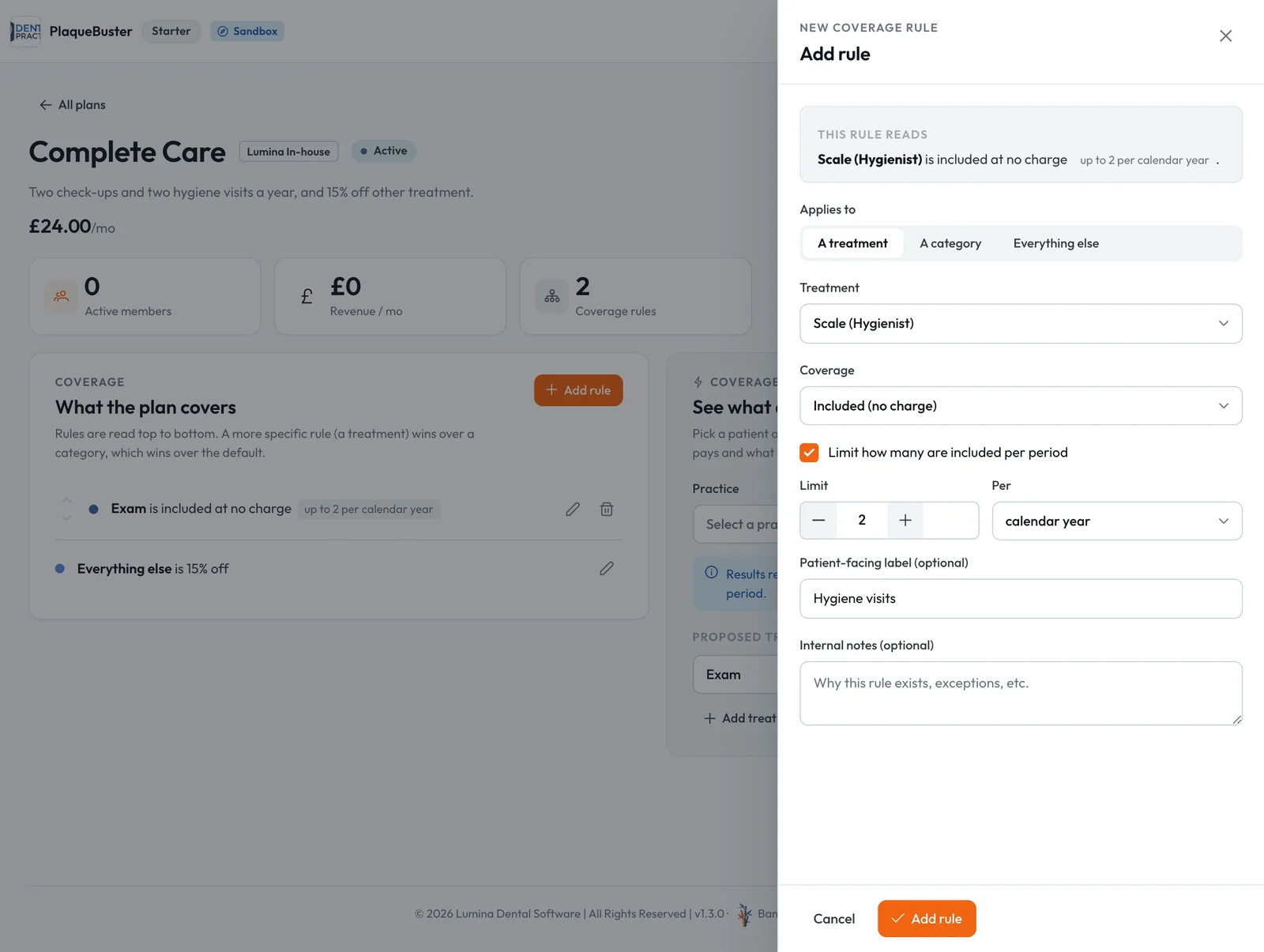
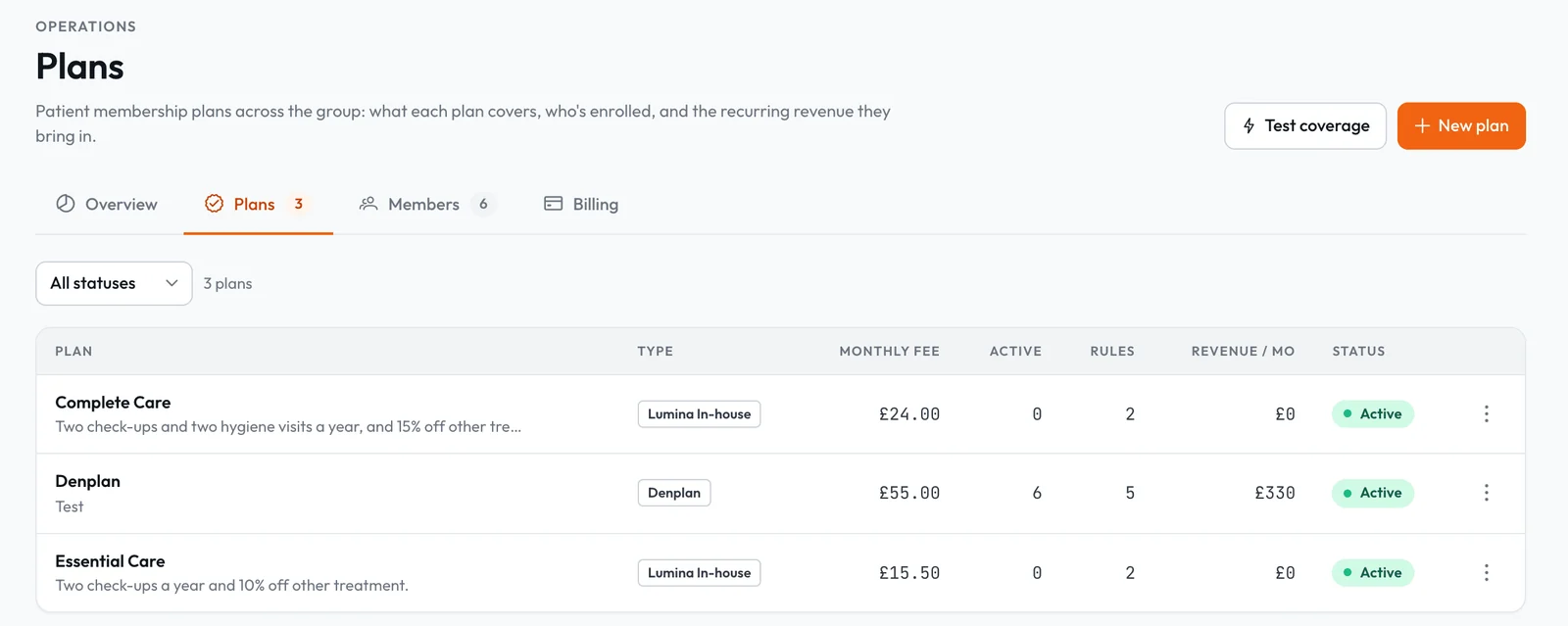
You write the rules. Set the monthly fee and, if you want one, a joining fee. The joining fee is charged once, with the first monthly payment. Then decide how the plan treats each treatment or category: included, discounted, a fixed fee or excluded. An included treatment can have a limit of 1 to 12, counted per calendar year, membership year or rolling 12 months. Each rule reads back as a sentence, for example “Scale (Hygienist) is included at no charge, up to 2 per calendar year”. Before you launch, test the cover on a real patient. Pick the patient and the proposed treatment, and Lumina shows what the plan pays and what the patient pays.
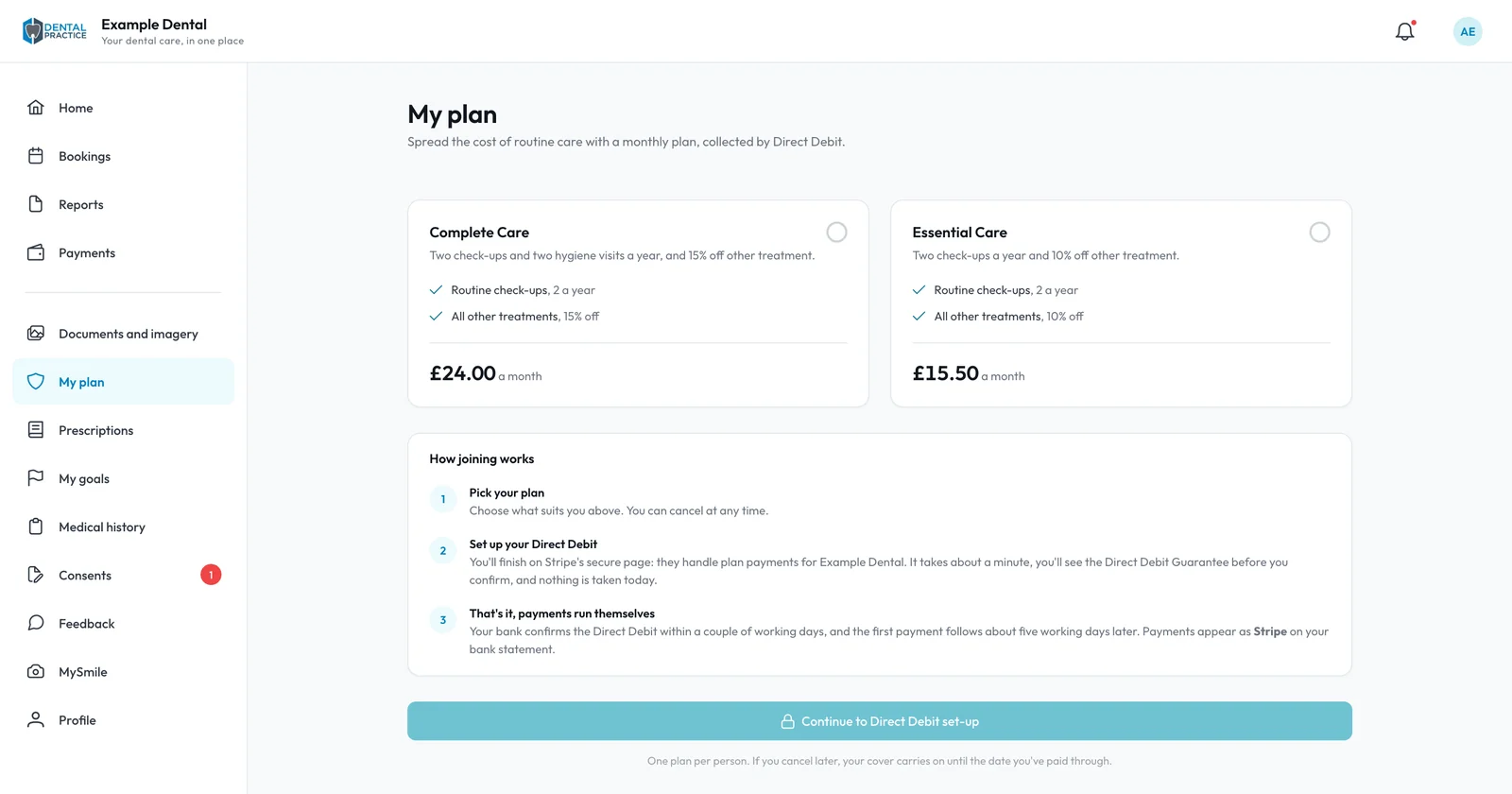
Patients join from their phone. A patient can choose a plan from My plan in the Patient Portal. Or reception can use Add to plan at the desk, which gives a QR code and a link. Lumina never takes bank details at the desk. The patient sets up the Direct Debit on Stripe’s secure page in about a minute. They see the Direct Debit Guarantee before they confirm. If an error is made, the Direct Debit Guarantee entitles them to a full and immediate refund from their bank or building society. The bank confirms the Direct Debit within a couple of working days. The first payment follows about five working days later.
The money goes to you. Payments go straight into the practice’s account. Lumina takes no cut of your plan income. The only cost is the Direct Debit processing fee on each collection. Payments show as “Stripe” on the patient’s bank statement. The Patient Portal tells them so before they join.
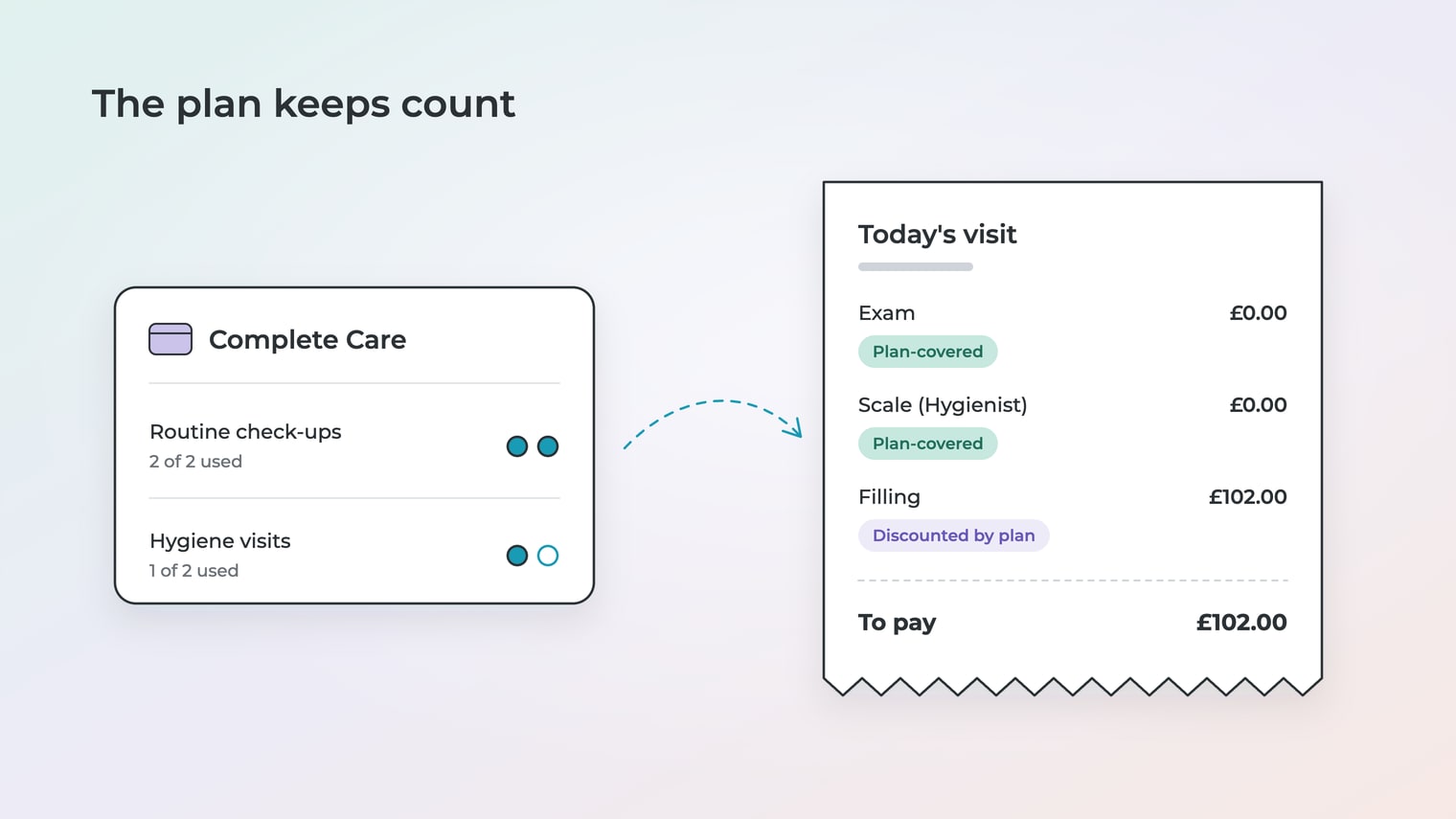
The plan keeps count. While the clinician charts, the price window shows the patient’s plan and allowances. At sign-off, Lumina prices every line against the plan. Once an allowance is used, the next one is charged in full. A visit the plan covers in full closes itself, with an invoice and a receipt. Otherwise reception sees only what the patient owes. A clinician can take one treatment off the plan, such as a cosmetic or material upgrade. The reason they give stays on record.
Failed payments become tasks. Lumina collects each month and retries failed payments. Plan billing in Lumina Core groups the memberships that need attention under four headings: Collections stopped, Payment overdue, Mandate failed and Awaiting mandate over a week. To-Do raises a task for failed payments, broken mandates and disputes. Reception sees a banner when a member’s payment is overdue. Practice managers can retry a collection or adjust allowances. They can also cancel a membership.
You can see whether the plan pays. The Overview in Lumina Admin shows active members and an estimate of monthly plan revenue. It also shows payment issues and cancellations this month. Or ask Lumina Intelligence “Whose plan payments are failing?” for the members to chase.
Your own plan is not insurance
A Lumina In-house plan is a prepaid maintenance plan. It includes no insurance. Before a plan can go live, the administrator must tick a box to confirm that.
Plans that include insurance, such as emergency cover, stay with a provider. You can still record them in Lumina.
The difference matters to patients. In July 2026 the Competition and Markets Authority published an update on its private dental services market study. It noted “the risk of patient confusion about payment options available to them, for example between dental insurance and capitation schemes.” When a patient joins your own plan, tell them plainly which kind of plan it is. My plan in the Patient Portal shows members what their plan includes.
Switch at your own pace
You do not have to move everyone at once. Record your existing Denplan, Practice Plan, Tabeo and Patient Plan Direct members in Lumina with their cover. Their cover rules apply at sign-off, the same as your own plan. The provider still collects their fees, while new patients join your own plan.
Take a look
Your patients already pay for their plan every month. The open question is how much of it reaches the practice.
Start with your own figures and work out your own number.
If you would like to see a plan from both sides, book a demo and we will walk you through one, from the cover rules to the patient’s Direct Debit. Or get started for free and build your first plan at your own pace.